When Fashion Meets Fiction: The Viral AI Image That Blurred Reality
- Mar 19
- 3 min read
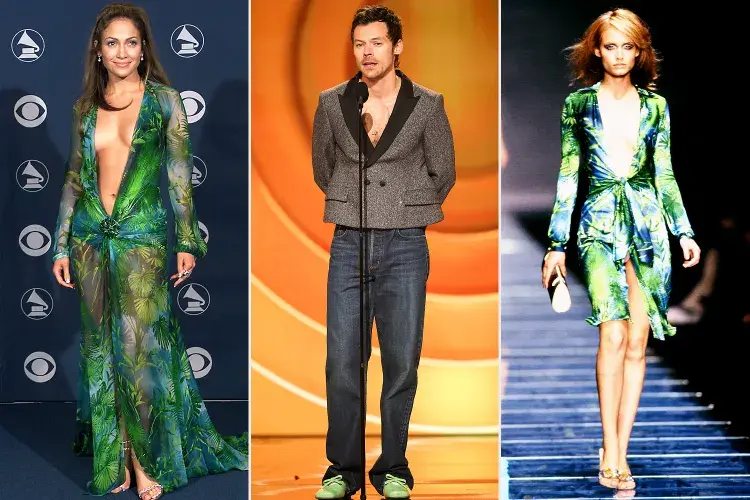
In the fast moving world of social media, it does not take long for a single image to capture global attention. Recently, an AI generated image of Harry Styles wearing the iconic Versace jungle dress went viral shortly after the Grammys. The image was so convincing and creatively styled that many fans were both amused and momentarily confused. Even Donatella Versace herself joined the conversation, playfully responding with her approval. What began as a lighthearted moment quickly evolved into something more thought provoking.
According to People, the image was entirely artificial, yet it spread widely across the internet as if it were a real fashion moment. The dress itself carries cultural significance, famously worn by Jennifer Lopez in 2000, and its reappearance through AI only added to the intrigue. As fans shared and reacted to the image, it became clear that the line between imagination and reality is becoming increasingly difficult to distinguish.
At first glance, the trend feels harmless and even joyful. There is something undeniably fun about seeing creative reinterpretations of celebrities, especially when they challenge traditional norms of fashion and identity. Many fans experienced a sense of excitement and curiosity, enjoying the playful nature of the image and the way it reimagined a familiar figure in a bold new context. It reflects how artificial intelligence can unlock new forms of creativity, allowing people to explore ideas that may never happen in real life.
Yet beneath this sense of entertainment lies a deeper emotional tension. The same technology that allows for imaginative expression also introduces uncertainty. When an image looks real but is not, it raises subtle questions about trust. Viewers may begin to wonder whether what they are seeing online can be taken at face value. This feeling is not always dramatic, but it lingers quietly in the background, shaping how people engage with digital content.
The rise of AI generated media also brings forward important questions about identity and consent. While the image of Harry Styles was created by fans, it still uses the likeness of a real individual. As these tools become more advanced, the ability to recreate anyone’s appearance in any scenario becomes easier. This raises concerns about how personal image rights should be protected and who has the authority to control how a person is represented in the digital space.
At the same time, the benefits of this technology are difficult to ignore. Artificial intelligence is expanding the boundaries of creativity in industries such as fashion, entertainment, and design. It allows artists and fans alike to experiment with ideas, remix cultural moments, and engage with media in new ways. In many cases, it can make creative expression more accessible, giving more people the ability to participate in shaping digital culture.
However, the risks are equally significant. As AI generated images become more realistic, the potential for misuse increases. What begins as harmless fan art could evolve into misleading content or even manipulation. The challenge lies in ensuring that creativity does not come at the cost of authenticity and trust.
The viral image of Harry Styles in the Versace dress ultimately represents more than just a fleeting internet trend. It captures a moment in time where technology, culture, and identity intersect in complex ways. It shows how artificial intelligence can delight and inspire, while also quietly reshaping how we understand reality.
As society continues to embrace these tools, the question is no longer whether AI will influence creativity, but how we choose to navigate its impact. The excitement is real, but so is the responsibility that comes with it.


honstly nowadays idk what is real and what is ai HELP
Honestly there is nothing wrong and in fact good to use for entertainment of such sort, there just must be ways to safeguard it such that it does not get out of hand.